


Green Tea Extract in RTD Beverages: Clarity, Color Stability and Shelf-Life
Adding green tea extract to ready-to-drink (RTD) beverages is not the same as adding it to a clear serum. Beverage formulas must remain visually acceptable through shelf life while managing catechin oxidation, pH drift, and possible haze formation.
Procurement and formulation teams should verify solubility, color behavior under storage, and batch documentation before selecting a cosmetic grade or food grade green tea extract for beverage use.
Written by Blueeyes Bio Technical Content Team
Publisher: Blue Eyes Biotech Co., Ltd.
Technical scope: beverage formulation, raw-material selection and stability screening for green tea extract in RTD drinks.
1. Why Green Tea Extract Behaves Differently in Beverages
Cosmetic serums are often small-volume, opaque or semi-opaque systems. RTD beverages are typically transparent, water-based and exposed to light on retail shelves. Green tea extract catechins—especially epigallocatechin gallate (EGCG, CAS 989-51-5)—are hydrophilic and heat-sensitive, but they can also oxidize and brown over time even in clear liquids.
The same ingredient that performs well in a serum may haze, precipitate or discolor in a beverage if the pH, buffering, oxygen exposure and packaging are not evaluated together.
Start supplier discussions with your beverage concept and target addition level forcosmetic grade green tea extractor food-grade equivalent, then verify performance in the actual beverage matrix.
2. Solubility and Clarity: Clear vs. Hazy Beverages
Standard green tea extract powders vary widely in solubility. Some food-grade grades are formulated for rapid cold-water dispersion; others require warming or may leave a slight haze. For transparent RTD beverages, clarity is a critical quality attribute.
| Form Type | Typical Beverage Behavior | Formulation Note |
|---|---|---|
| High-purity EGCG powder | Highly water-soluble; may produce clear solutions at low addition levels. | Verify batch-specific solubility; some lots may require pH adjustment. |
| Standardized polyphenol extract | May contain non-catechin polyphenols that contribute haze or sediment. | Request filtration or dispersion testing before scale-up. |
| Decaffeinated green tea extract | Caffeine removal does not automatically improve clarity. | Check both caffeine result and visual clarity separately. |
Do not assume that a powder labeled “water-soluble” will remain clear in your specific juice, electrolyte or carbonated base. Screen in the actual vehicle.
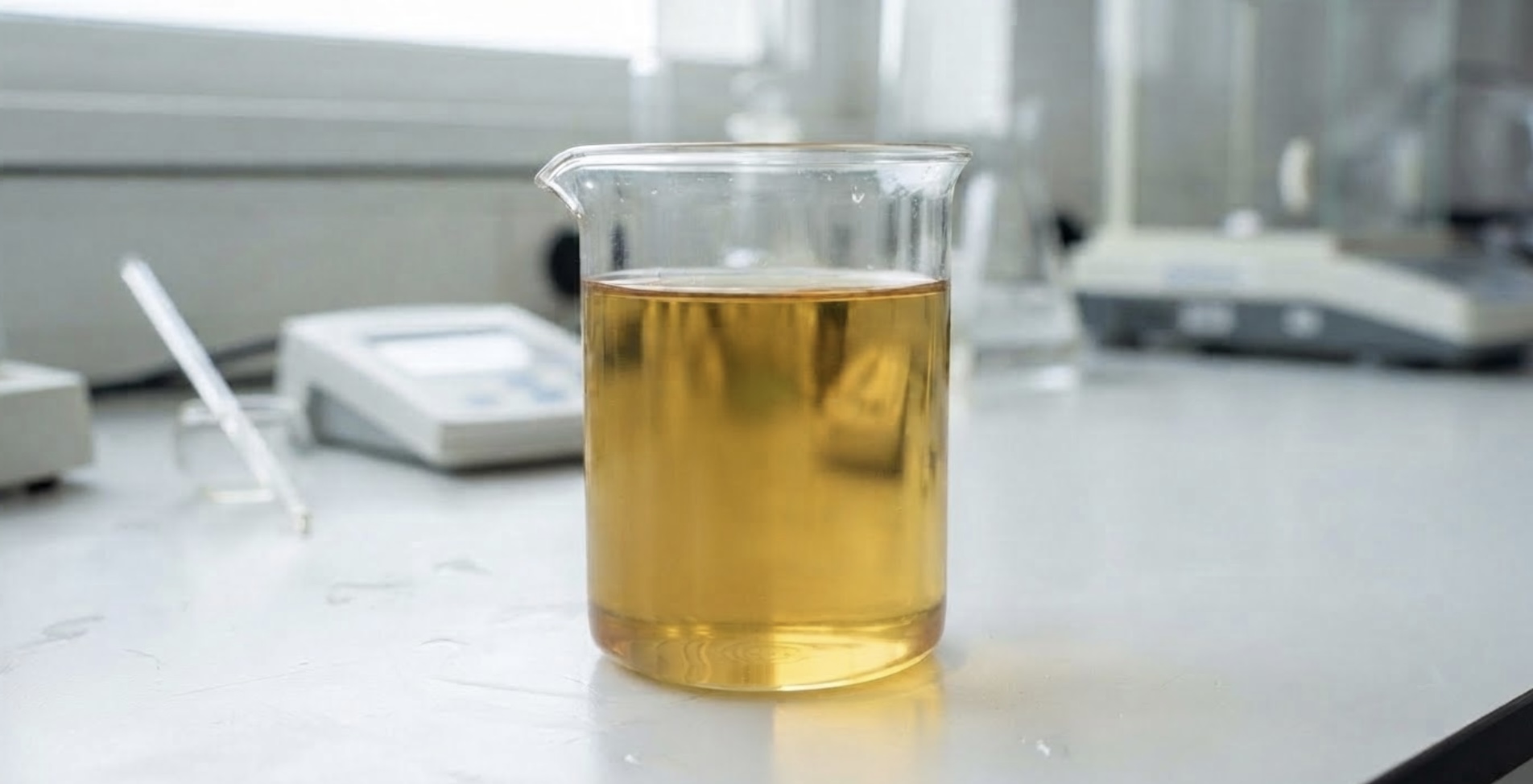
Figure 1: Green tea extract dissolved in a clear beverage matrix. Appearance under initial mixing does not guarantee stability during shelf life.
3. Color and Browning: What Changes Over Shelf Life
Green tea catechins can oxidize to brown or amber-colored compounds when exposed to oxygen, heat, light and trace metals. In a transparent beverage, even slight browning is visually obvious to consumers.
A brown tint does not always mean the product is unsafe, but it signals active degradation and can fail visual quality specifications. Formulators should monitor color change (ΔE or absorbance at 420 nm) alongside EGCG retention during stability testing.
- Trace metals: Iron and copper in water or ingredients can catalyze polyphenol oxidation.
- pH: Neutral to alkaline conditions accelerate catechin degradation; mildly acidic conditions generally slow it.
- Light: Transparent packaging exposes the beverage to retail lighting; amber bottles or overwrap reduce photo-oxidation.
- Headspace oxygen: Residual oxygen at filling accelerates browning; nitrogen flushing may be considered.
For formulation screening concepts related to oxidation prevention, see our companion guide onhow to prevent EGCG browning in serums.
4. pH Buffering and Beverage Compatibility
Green tea catechins are generally more stable in mildly acidic conditions. Many RTD tea and functional beverages target pH 3.0–5.0, which can help suppress catechin oxidation while maintaining microbial protection from preservatives.
Practical screening variables:
• Buffer system (citrate, phosphate or organic acids)
• Target pH range (commonly pH 3.2–5.0 for RTD teas)
- Measure final pH after all ingredients are combined, not before.
- Track pH drift during storage; a shift can signal ingredient interaction or microbial activity.
5. Packaging and Storage Considerations
Packaging is part of the stability system for green tea beverages. Clear bottles showcase clarity but expose catechins to light. Amber glass, opaque PET or overwrap can reduce light-induced oxidation.
- Evaluate headspace oxygen at filling.
- Consider nitrogen flushing for oxygen-sensitive formulas.
- Store accelerated stability samples at 40°C / 75% RH or equivalent, and real-time samples at room temperature.
- Assess color, clarity, pH and quantified actives at defined intervals.
6. Ingredient Compatibility in Multi-Active Beverages
RTD beverages often combine green tea extract with juice concentrates, electrolytes, vitamins or other botanicals. Each addition changes the stability risk profile.
- Vitamin C: Can act as a co-antioxidant but may interact depending on pH and concentration.
- Fruit juice: Natural pigments and sugars can mask or accelerate perceived color change.
- Preservatives: Sodium benzoate, potassium sorbate or other systems should be tested for compatibility with green tea extract.
- For multi-active compatibility concepts, see our guide on green tea extract with vitamin C and niacinamide compatibility.
7. Buyer Checklist: Documents and Tests Before Purchase
| Document or Test | What to Confirm |
|---|---|
| Batch-specific COA | EGCG or total catechins, moisture, heavy metals, microbiology. |
| Solubility report in water | Concentration, temperature and observation time documented. |
| Caffeine result | If a decaffeinated grade is required. |
| Residual solvent declaration | If solvent-assisted extraction was used. |
| Sample-to-bulk identity | Confirm the evaluated sample matches the commercial lot. |
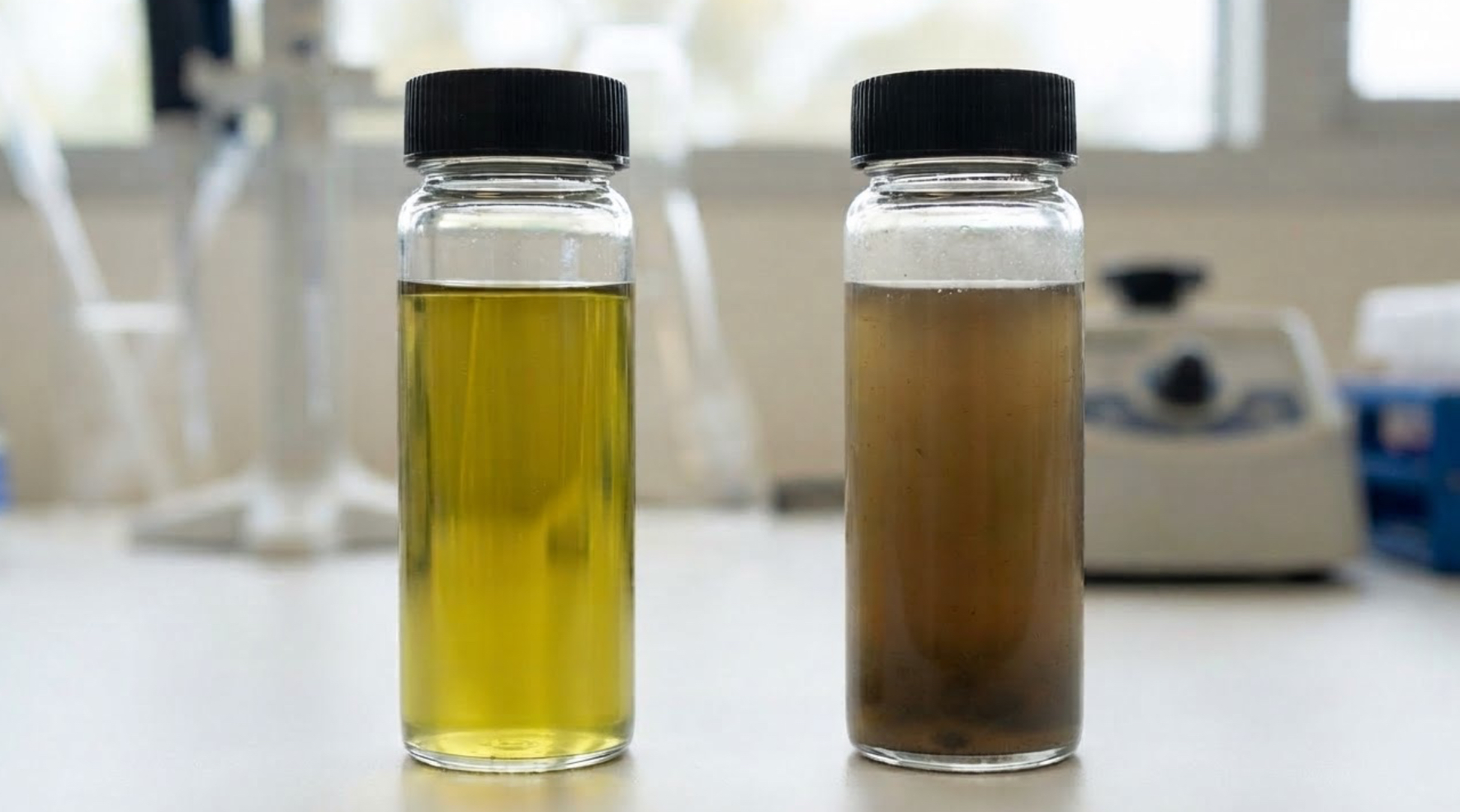
Figure 2: Fresh vs. stored green tea beverage samples. Color and clarity changes over storage illustrate why accelerated stability testing matters before commercial launch.
Request Sample and Batch COA
Send your beverage concept, target addition level and pH range. Ask about green tea extract grades suitable for RTD formulations, batch-specific COA and stability support documentation.
Sample quantity, charges, shipping, stock status and documentation availability require confirmation for the selected grade.
Request Green Tea Extract Sample via WhatsApp
Email: [email protected]
Frequently Asked Questions
Does green tea extract always make RTD beverages turn brown?
No. Browning depends on the grade, concentration, pH, packaging and storage conditions. Some formulations remain clear and acceptable for shelf life; others develop haze or amber tint. Screening in the actual formula is required.
Can cosmetic grade green tea extract be used in beverages?
Not automatically. Cosmetic grade and food/beverage grade have different regulatory and safety expectations. Confirm the ingredient’s food-grade status, specification and intended-use documentation with the supplier before beverage use.
Does high EGCG percentage guarantee clear beverages?
No. High EGCG content refers to purity, not solubility or clarity. Some high-EGCG powders still precipitate or haze in complex beverage matrices. Confirm dissolution and clarity in your target vehicle.
References and Evidence Limits
[1]“Comparison of colorimetric methods for the analysis of total polyphenols in green tea extracts.” Bioscience, Biotechnology, and Biochemistry, 2024. Relevant to assay interpretation; it does not validate any Blueeyes Bio batch.
[2]“Great green tea ingredient? A narrative literature review on epigallocatechin gallate and its biophysical properties for topical use in dermatology.” Phytotherapy Research, 2020. Background on EGCG chemistry; beverage performance must be tested separately.
[3]Regulation (EC) No 1223/2009 on cosmetic products. Consult applicable food/beverage regulations for beverage markets separately.
Evidence limitation: this article describes general formulation considerations. It does not verify the stability of any specific commercial beverage or Blueeyes Bio batch. Photographs added to this page must be genuine and traceable to their stated samples.
Technical Summary
Blueeyes Bio’s beverage framework distinguishes raw-material purity from finished-formula stability. Qualify solubility, color stability under storage, pH buffering and packaging before selecting green tea extract for RTD beverages; request batch-specific documentation for each commercial lot.


