


Green Tea Extract in Sunscreen Formulations: SPF Synergy and Photostability Guide
Green tea extract and EGCG are not approved UV filters and do not by themselves provide an SPF value. In sunscreen formulations, they are studied as complementary antioxidant and soothing ingredients used alongside approved UV filters.
Formulators must substantiate SPF and UVA performance with the finished product through required methods such as ISO 24444 for SPF and ISO 24443 for UVA photoprotection, including the photostability irradiation step. Green tea extract can support antioxidant positioning, but its contribution must be verified in the actual formula rather than assumed from raw-material data.
Written by Blueeyes Bio Technical Content Team
Publisher: Blue Eyes Biotech Co., Ltd.
Technical scope: sunscreen formulation, UV-filter compatibility and photostability screening.
1. The Functional Role of Green Tea Extract in Sunscreens
When formulating sunscreens with cosmetic grade green tea extract, procurement and R&D teams should treat the material as an antioxidant adjunct to approved UV filters, not as a UV filter itself. The main catechin is epigallocatechin gallate (EGCG, CAS 989-51-5), alongside epicatechin gallate (ECG), epigallocatechin (EGC) and epicatechin (EC).
Human and laboratory studies have investigated topical green tea polyphenols in UV-exposed skin. A study by Katiyar and colleagues reported that topical EGCG applied to human skin before UVB exposure (4 MED) significantly blocked UVB-induced leukocyte infiltration and reduced myeloperoxidase activity, and also decreased UVB-induced erythema [1]. A subsequent review described inhibition of UVB-induced inflammatory responses, oxidative stress and immunosuppression by green tea polyphenols in both animal and human skin models [2]. Elmets and colleagues reported that green tea polyphenols applied before ultraviolet injury reduced sunburn cell formation in human skin [3].
These findings support investigation of green tea extract as a photoprotective adjunct, but they do not establish an SPF value or a UV-filtering function. Study outcomes depend on the specific preparation, concentration, vehicle, application time and endpoint measured. A pilot study published in the Journal of the American Academy of Dermatology found that EGCG applied after UV exposure enhanced UV-induced caspase-3 positive epidermal cells by 47% at 48 hours, and the EGCG-treated side developed more erythema than placebo [4]. This illustrates that post-UV application data should not be interpreted as photoprotection, and that timing and endpoint selection change the observed result.
In major regulatory frameworks, any product claiming SPF, UV protection or sunburn prevention must rely on approved UV filters and validated testing. Green tea extract is not among the approved UV filters used for those claims.
2. Sunscreen Efficacy and Photostability Testing Context
Sunscreen performance is evaluated through SPF for UVB protection and UVA protection parameters. The EU Commission Recommendation 2006/647/EC sets out efficacy and claim conditions for sunscreen products; it references ISO 24444 for in vivo SPF determination and ISO 24443 for in vitro UVA photoprotection [5]. Under this framework, the UVA protection factor (UVAPF) is measured in vitro, and claims related to UVA protection require the UVAPF to be at least one third of the labelled SPF and the critical wavelength to be at least 370 nm.
Photostability is a distinct and critical requirement. ISO 24443 includes an irradiation step in which the product film is exposed to a controlled UV dose and the UVA protection is re-measured. A formula passes only if the post-irradiation UVAPF remains at or above the SPF/3 threshold and the critical wavelength remains at or above 370 nm after irradiation [6]. Photostability failure is a common development issue for some organic filter systems, including certain avobenzone-containing formulas, so it must be tested rather than assumed stable.
Antioxidants such as green tea catechins are sometimes studied to support photostability or to reduce UV-induced oxidative stress in the skin. Any such benefit must be demonstrated in the finished formula. An in vitro study of an EGCG-containing foundation reported an SPF value near 30 by UV–visible spectrophotometry at 290–320 nm [7]. That result is a screening value for one specific makeup base; it is not a substitute for ISO 24444 in vivo SPF testing or for a compliant SPF label claim.
3. Formulating Sunscreen Emulsions with Green Tea Extract
Most sunscreens are emulsions, gels, sprays or sticks. Standard green tea extract powder is water-soluble and is suited to water-phase addition in emulsion sunscreen systems. It should not be dispersed directly into anhydrous oil phases or anhydrous stick bases, because the hydrophilic catechins will not dissolve and may cause specks, grit or sedimentation. Where an anhydrous format is required, a specifically engineered oil-compatible green tea ingredient is necessary.
For emulsion processing, pre-dissolve the extract in water or a water/glycol slip, then add it during the cooldown phase below about 40°C. Avoid prolonged high-temperature holding and minimize high-shear aeration after addition, because dissolved oxygen and heat accelerate catechin oxidation, browning and assay loss.
The delivered active level should be calculated from the extract specification, not assumed from a generic inclusion rate. Using the same reporting basis:
EGCG in formula (%) = inclusion level of the extract (%) × EGCG assay of the extract (%) ÷ 100
For example, if a sunscreen contains 2.0% of an extract standardized to 50.0% EGCG on an as-supplied basis, the nominal EGCG contribution is 1.0% (2.0 × 50.0 ÷ 100). The actual acceptance decision should still rely on finished-product assay, because processing, pH, UV filters and packaging can all affect retention.
Compatibility should be evaluated with the full filter system, emulsifiers, thickeners and preservatives. Catechins can interact with trace metals and some formulation components. Chelating agents such as sodium phytate or, where permitted, disodium EDTA can help control metal-catalyzed oxidation. If the sunscreen also contains vitamin C derivatives or niacinamide, review our companion study on green tea extract with vitamin C and niacinamide compatibility before finalizing the pH and stability protocol.
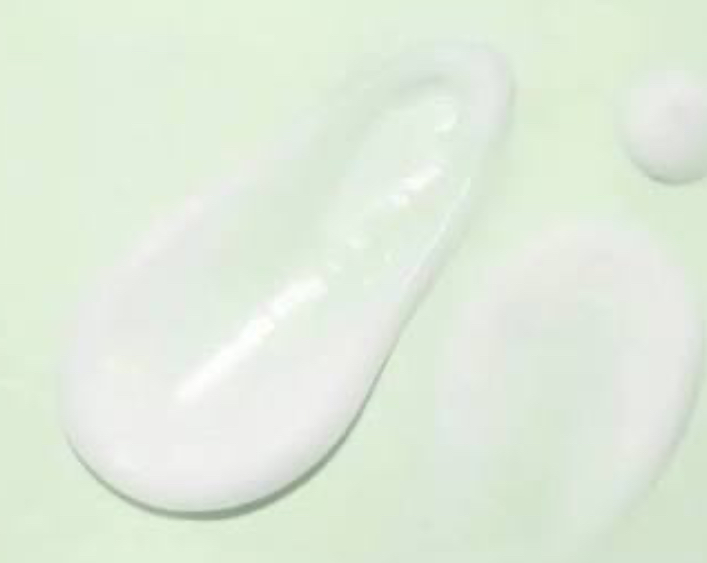
Figure 1: Emulsion sunscreen texture and uniform appearance. Visual checks support physical stability screening but do not verify SPF, UVA protection or photostability.
4. Oxidation, Color and Stability Control in Daytime UV-Exposed Products
Sunscreen products are exposed to light, heat and oxygen during distribution, shelf storage and consumer use. Under these conditions, catechins can oxidize, producing brown discoloration and a reduction in measurable actives. This is both an appearance problem and a chemical-stability problem.
Because catechins can oxidize and brown under light, heat and trace-metal exposure, teams should also consult how to prevent EGCG browning in serums when designing daytime sunscreen products. Practical controls include buffering to a pH compatible with both the extract and the filter system, using chelators for trace metals, limiting headspace oxygen through airless or protected packaging, and using opaque or UV-protective packaging where appropriate.
Accelerated and real-time stability studies should track color, EGCG retention, pH, viscosity, preservation and physical appearance. Photostability testing should be performed on the finished sunscreen, not inferred from the raw material or from a simple solution test.
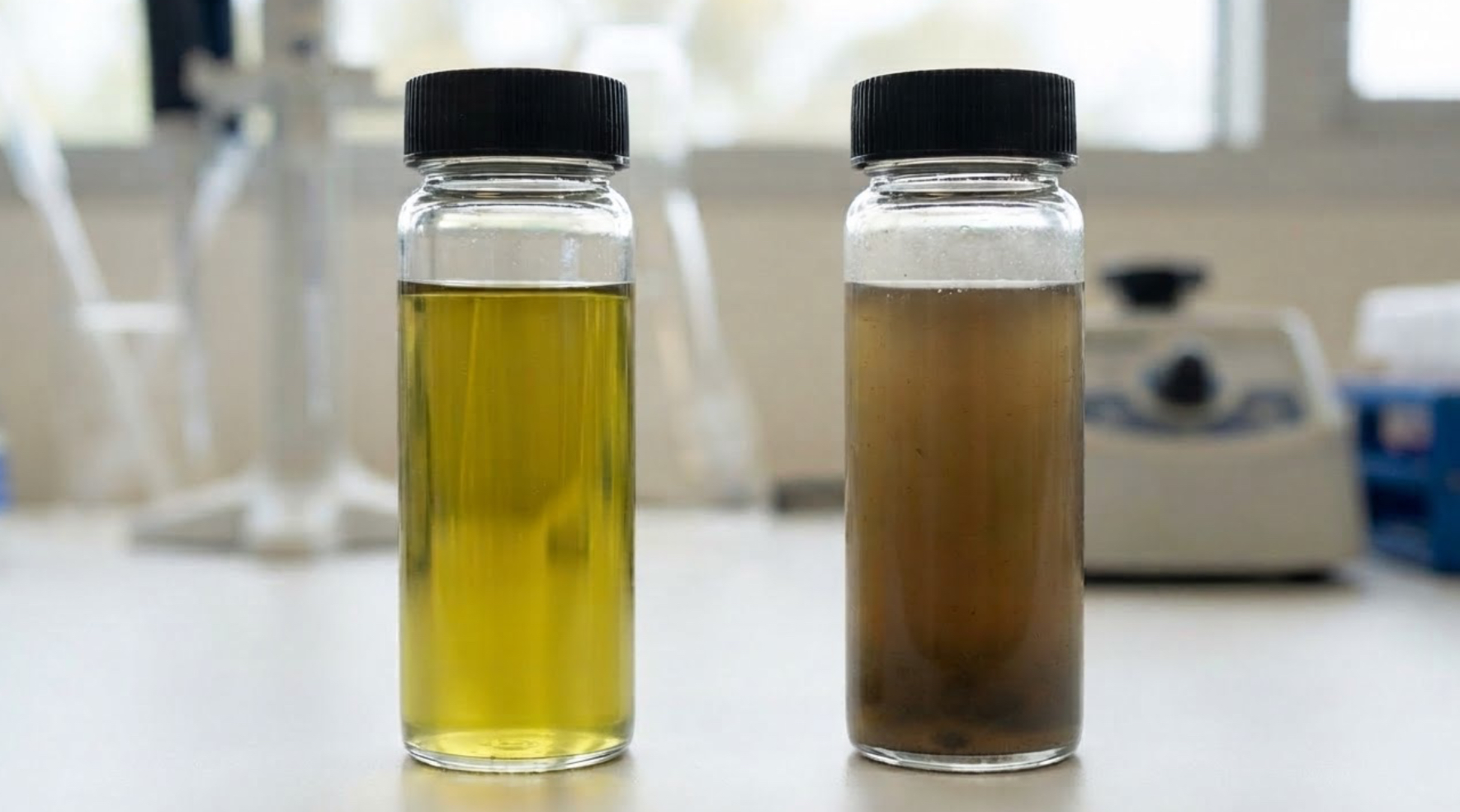
Figure 2: Sunscreen sample color comparison. Color change may indicate oxidation or instability, but confirmation requires finished-product assay and photostability testing.
5. Claims, Labeling and Regulatory Boundaries
In the United States, a product claiming to prevent sunburn or provide SPF is regulated as an over-the-counter drug and must use approved UV filters listed in the FDA sunscreen framework. In the European Union, sunscreen efficacy and claims are governed by Commission Recommendation 2006/647/EC, and cosmetic claims more broadly must meet the common criteria in Regulation (EU) No 655/2013 [8]. Green tea extract and EGCG are not approved UV filters in these systems.
Consequently, SPF and broad-spectrum claims must be attributed to the approved UV filters and supported by the required test methods. Green tea extract may be positioned as an antioxidant adjunct, for example “contains antioxidants” or “helps protect against environmental free-radical exposure,” subject to local rules and adequate substantiation. Claims that imply treatment or prevention of sunburn, UV damage or skin disease should be avoided unless the product is a legally marketed drug with approved filters and labeling.
6. Buyer and QA Checklist for Sunscreen Projects
- Confirm the green tea extract specification: named marker (EGCG or total catechins), HPLC assay, reporting basis and moisture.
- Confirm the UV filter system and the target SPF/UVA category for the destination market.
- Plan ISO 24444 in vivo SPF testing and ISO 24443 in vitro UVA testing, including the photostability irradiation step.
- Set the extract addition level and calculate the nominal active catechin contribution.
- Define the manufacturing process: pre-dissolution, cooldown addition below about 40°C, controlled shear, and avoidance of prolonged heating.
- Evaluate chelators, pH, color, viscosity and preservative efficacy in the finished sunscreen.
- Qualify packaging for light and oxygen protection.
- Verify sample-to-bulk identity and agree change-notification requirements.
- Keep marketing copy compliant: attribute SPF to approved filters, not to green tea extract.
Request Sample and Batch COA for Sunscreen Screening
Share your sunscreen format, UV filter system, target SPF category and required catechin specification. Ask about a green tea extract sample, current batch COA, HPLC assay documentation and stability support for formulation screening.
Sample quantity, charges, shipping, stock status and documentation availability require confirmation for the selected grade.
Request Sunscreen-Grade Sample via WhatsApp
Email: [email protected]
Frequently Asked Questions
Can green tea extract replace an approved UV filter or provide SPF by itself?
No. Green tea extract and EGCG are not approved UV filters in major regulatory frameworks. SPF and UVA protection must come from approved UV filters and must be verified by required test methods such as ISO 24444 for SPF and ISO 24443 for UVA. Green tea extract can be used as an antioxidant adjunct, but its own SPF contribution must not be assumed without finished-product testing.
Does adding green tea extract automatically improve sunscreen photostability?
No. Photostability must be measured. ISO 24443 includes an irradiation step; post-irradiation UVA protection factor and critical wavelength are compared with pre-irradiation values. Some sunscreen systems fail photostability after UV challenge. Antioxidants may help in specific formulations, but the benefit must be demonstrated in the finished product rather than inferred from raw-material antioxidant data.
How should green tea extract be added to an emulsion sunscreen, and how is the active level calculated?
Standard water-soluble extract should be pre-dissolved and added during the cooldown phase below about 40°C, with controlled shear to limit aeration. The delivered active can be estimated as the inclusion level of the extract multiplied by its EGCG or catechin assay on the same reporting basis, divided by 100. Final acceptance should be based on finished-product assay, color, pH, viscosity and photostability results, not on the nominal addition level alone.
References and Evidence Limits
[1]Katiyar SK, Matsui MS, Elmets CA, Mukhtar H. “Polyphenolic antioxidant (-)-epigallocatechin-3-gallate from green tea reduces UVB-induced inflammatory responses and infiltration of leukocytes in human skin.” Photochemistry and Photobiology, 1999;69(2):148–153.
[2]Katiyar SK. “Skin photoprotection by green tea: antioxidant and immunomodulatory effects.” Current Drug Targets - Immune, Endocrine & Metabolic Disorders, 2003;3(3):234–242.
[3]Elmets CA, Singh D, Tubesing K, et al. “Cutaneous photoprotection from ultraviolet injury by green tea polyphenols.” Journal of the American Academy of Dermatology, 2001;44(3):425–432.
[4]“The effects of topically applied constituents of green tea (caffeine or (−)-epigallocatechin; EGCG) on UV-induced increase in p53 and apoptotic markers in the skin of human volunteers, a pilot study.” Journal of the American Academy of Dermatology, 2004;50(3, Suppl 1):P64.
[5]Commission Recommendation of 22 September 2006 on the efficacy of sunscreen products and the claims made relating thereto (2006/647/EC).
[6]“EU vs US Sunscreen Regulation: SPF Testing, Approved Filters.” Onerchem knowledge page. Describes ISO 24443 photostability protocol and post-irradiation pass criteria.
[7]“Formulation and evaluation of cosmetic foundation with epigallocatechin gallate (EGCG) as an active ingredient: in vitro SPF assessment.” International Journal of Applied Pharmaceutics.
[8]Regulation (EU) No 655/2013 laying down common criteria for the justification of claims used in relation to cosmetic products.
[9]“Global Regulations on SPF and UVAPF Testing – Ensuring Sunscreen Safety Worldwide.” GBA Group Cosmetics. Summarizes EU adoption of ISO 24444 for in vivo SPF and ISO 24443 for in vitro UVA photoprotection.
Evidence limitation: Published studies used specific green tea preparations, concentrations, vehicles and application timings. They do not verify the performance of any Blueeyes Bio batch or of a customer’s finished sunscreen. EGCG is not a UV filter and must not be presented as a standalone SPF active. Photostability, SPF and UVA results must be generated on the finished product with its approved filter system using the required market-specific test methods.
Technical Summary
Blueeyes Bio’s sunscreen-formulation framework positions green tea extract and EGCG as antioxidant adjuncts to approved UV filters, not as UV filters themselves. Qualified development requires verified SPF/UVA testing under ISO 24444 and ISO 24443, mandatory photostability evaluation, controlled cooldown addition below about 40°C, trace-metal and oxidation control, and finished-product assay confirmation. Claims must attribute SPF to approved filters and comply with EU and US regulatory boundaries.


