


Green Tea Extract in Oral Care: Toothpaste and Mouthwash Formulation, Stability and Claim Boundaries
Green tea extract is studied in oral care as a cosmetic adjunct for plaque, gingival-index and oral malodour endpoints, not as a drug for treating periodontal disease. Human studies of green tea mouthwash report improvements in plaque, gingival and bleeding indices, but effects are usually weaker than chlorhexidine and depend on the tested preparation.
Finished toothpastes and mouthwashes require product-specific stability, preservation and claim substantiation. Catechins can oxidize and darken in certain toothpaste bases, so stabilization and compatibility must be demonstrated in the actual formula.
Written by Blueeyes Bio Technical Content Team
Publisher: Blue Eyes Biotech Co., Ltd.
Technical scope: oral care formulation, clinical evidence on green tea mouthwash, catechin stabilization and cosmetic claim substantiation.
1. Why Green Tea Extract Is Studied for Oral Care
Oral care products such as toothpaste, mouthwash, oral spray and denture cleansers are a distinct personal-care category. When developing oral care products with cosmetic grade green tea extract, formulators usually position the ingredient as an antioxidant and soothing botanical adjunct rather than a therapeutic actives.
Green tea (Camellia sinensis) extract contains catechins, with epigallocatechin gallate (EGCG, CAS 989-51-5) as the major constituent. Standard cosmetic-grade extracts are water-soluble, which suits aqueous systems such as mouthwashes, oral sprays and many toothpaste gel or paste bases.
In oral care, the commercial interest is usually “antioxidant oral care,” “fresh breath,” “supports gum health appearance” or “helps maintain a clean mouth.” Any suggestion that the product treats, cures or prevents gingivitis or periodontitis would move it toward a medicinal or drug claim, which requires a different regulatory pathway and evidence.
2. Clinical Evidence on Green Tea Mouthwash and Oral Health
Several human studies have evaluated green tea mouthwash rather than the raw extract alone. The table summarizes three frequently cited examples and their interpretation boundaries.
| Study and Reference | Design | Reported Result | Interpretation Boundary |
|---|---|---|---|
| Kose et al. [1] | 112 participants with gingivitis; 4 groups: chlorhexidine (positive control), essential oil, green tea extract, white tea extract mouthwash; 4 weeks. | All groups showed significant clinical improvement (p<0.05); chlorhexidine improved most but caused significant tooth/tongue discolouration. Green tea gave short-term benefit (1 month); IL-1β and MMP-8 in gingival crevicular fluid were lower than baseline. | Green tea effect was weaker than chlorhexidine; result applies to the tested mouthwash, not to all green tea extracts or toothpastes. |
| Radafshar et al. [2] | Double-blinded, randomized, controlled trial; green tea (Camellia sinensis) mouthwash containing 1% tannin; chronic gingivitis and dental plaque. | Evaluated effects on dental plaque and chronic gingivitis; supports investigation of green tea mouthwash as an oral care adjunct. | Study used a specific mouthwash with 1% tannin; it does not prove efficacy for every green tea extract or dentifrice format. |
| Jenabian et al. [3] | Single-blinded, placebo-controlled trial; 5% green tea mouthwash vs normal saline; female students with chronic generalized plaque-induced gingivitis; assessed over 5 weeks. | Plaque index (PI), gingival index (GI) and bleeding on probing (BOP) scores decreased over the study period; described as a safe, feasible adjunct for inflammatory periodontal conditions. | Some improvements did not reach statistical significance versus placebo; it is an adjunct, not a proven drug treatment. |
These studies support the investigation of green tea extract in oral care, but they should not be overstated. Most used small or specific populations, evaluated a single mouthwash preparation, and measured short-term indices. The same results cannot be assumed for a different extract specification, a toothpaste base, or a different concentration.
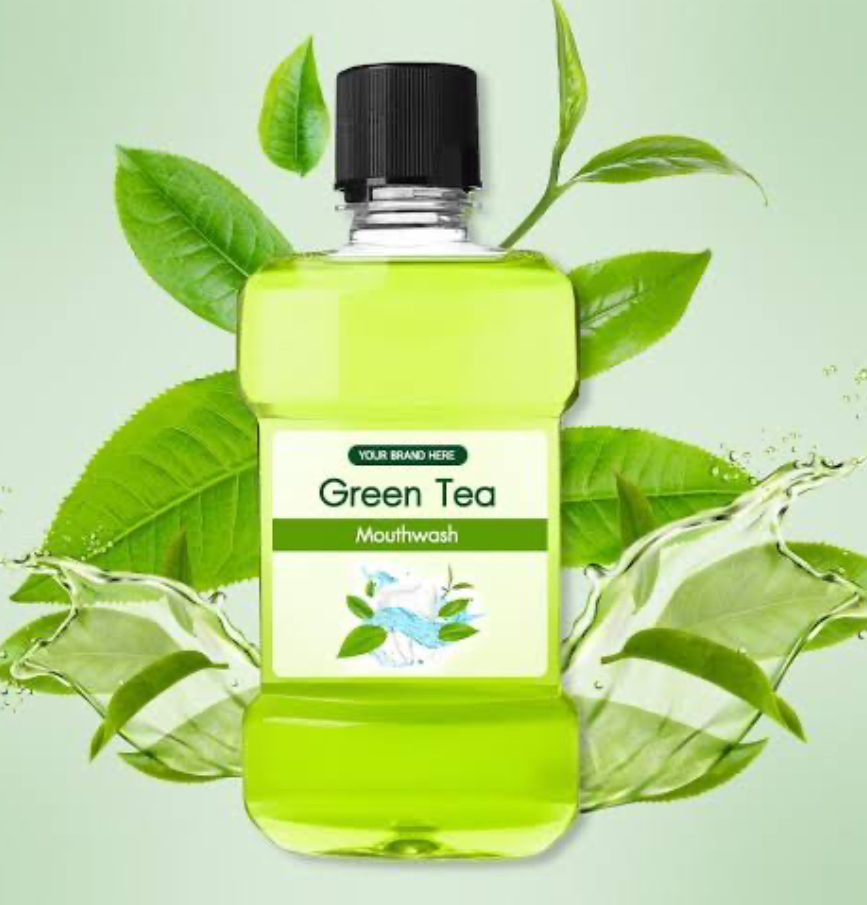
Figure 1: Green tea toothpaste, mouthwash or oral spray formulations. Visual appearance supports physical screening but does not verify clinical efficacy or finished-product stability.
3. Formulating Toothpaste and Mouthwash with Green Tea Extract
Mouthwashes and oral sprays are aqueous systems, so standard water-soluble green tea extract is usually pre-dissolved in water or a water/glycol phase and then combined with humectants, surfactants and flavours. Toothpastes are more complex: they may be aqueous gels, pastes with humectants, or abrasive systems containing silica or calcium carbonate.
The delivered active level should be calculated from the extract specification, not assumed. Using the same reporting basis:
EGCG in formula (%) = inclusion level of the extract (%) × EGCG assay of the extract (%) ÷ 100
For example, if a mouthwash contains 2.0% of an extract standardized to 50.0% EGCG on an as-supplied basis, the nominal EGCG contribution is 1.0% (2.0 × 50.0 ÷ 100). Final acceptance should rely on finished-product assay, because pH, surfactants and packaging can affect catechin retention.
Polyphenol oxidation control is also essential in oral care. The stabilization principles described in how to prevent EGCG browning in serums — pH control, chelators, oxygen limitation and protective packaging — remain relevant for aqueous mouthwashes and gel toothpastes.
The interaction principles described in green tea extract with vitamin C and niacinamide compatibility are also relevant whenever green tea polyphenols are formulated alongside other pH-sensitive or redox-active personal-care ingredients.
4. Stability, Color and Preservation
A key formulation challenge is catechin oxidation and colour darkening. Patent literature on oral care compositions reports that green tea catechins can darken chalk-based (calcium carbonate) toothpaste because catechins oxidize at the high pH of such bases; once oxidized, they are no longer available in the original form to deliver the intended benefit [4]. The patent describes using selected zinc salts — zinc chloride, zinc nitrate or zinc acetate — to stabilize catechins in calcium-carbonate systems and reduce darkening. It also indicates oral care compositions may contain about 0.1–5% catechins, with green tea extract often around 1–4%, depending on the catechin content of the extract (about 20–80% catechins by dry weight) [4].
Aqueous oral care products require preservation. Mouthwashes and toothpastes that contain water need a suitable preservative system and efficacy testing; ISO 11930 is the standard method for evaluating antimicrobial protection of a cosmetic product [8]. Even formats with lower water activity still need stability, odour, colour, pH and assay testing through the intended shelf life.
Useful finished-product screening for oral care includes:
- Colour, odour and appearance after accelerated and real-time storage.
- pH and viscosity stability where relevant to the format.
- EGCG or total catechin retention by a validated HPLC method.
- Preservative efficacy according to ISO 11930 for water-containing systems.
- Compatibility with abrasives, humectants, surfactants and flavour systems.

Figure 2: Oral care product stability and microbial challenge testing. Finished-product testing is required; raw-material study data do not replace product-specific verification.
5. Claim Boundaries and Regulatory Status
Oral care products such as toothpaste and mouthwash are generally regulated as cosmetics in the EU and must comply with the general safety requirements of Regulation (EC) No 1223/2009 [6]. Claims must be supported by adequate and verifiable evidence under Regulation (EU) No 655/2013 [7].
Based on the clinical studies, a brand should not claim that a green tea toothpaste or mouthwash treats, cures or prevents gingivitis or periodontitis. The studies evaluated green tea mouthwash as an adjunct and reported improvements in plaque, gingival or bleeding indices, sometimes weaker than chlorhexidine and sometimes not statistically superior to placebo. Appropriate cosmetic positioning may include “cleanses,” “freshens breath,” “antioxidant oral care,” or “helps maintain the appearance of healthy gums,” provided the finished product is tested to support the claim.
A review of green tea for oral antimicrobial and denture hygiene also notes limitations that formulators should respect: catechins such as EGCG can degrade under light, heat, oxygen and pH variation; polyphenols/tannins may cause extrinsic staining with prolonged exposure; batch-to-batch variability exists; and clinical evidence is still limited, with a need for standardized formulations and longer trials [5]. These limitations should be reflected in realistic claim language and stability testing.
6. Buyer and QA Checklist for Oral Care Projects
- Define the oral care format: toothpaste, mouthwash, oral spray or denture cleanser.
- Confirm botanical identity (Camellia sinensis leaf) and extract specification.
- State the marker: EGCG, total catechins or total polyphenols, with the HPLC assay and reporting basis.
- Set the inclusion level and calculate the nominal active contribution from the COA.
- Evaluate abrasive compatibility; for calcium carbonate systems, review catechin stabilization approaches such as zinc salts.
- Verify preservative efficacy (ISO 11930) and microbiological limits for water-containing products.
- Track colour, odour, pH, viscosity and EGCG retention through stability studies.
- Keep claims within cosmetic oral-care boundaries; avoid medicinal wording for gingivitis or periodontal disease.
Request Sample and Batch COA for Oral Care Formulation
Share your oral care format, target specification and whether you need a water-soluble or stabilized catechin system. Ask about a green tea extract sample, current batch COA, HPLC assay documentation and preservation or oxidation-stability support.
Sample quantity, charges, shipping, stock status and documentation availability require confirmation for the selected grade.
Request Oral-Care Sample via WhatsApp
Email: [email protected]
Frequently Asked Questions
Can green tea extract toothpaste or mouthwash treat gingivitis or periodontal disease?
No. The available studies evaluated green tea mouthwash as an oral care adjunct for plaque and gingivitis indices, often over 4–8 weeks, and some found weaker effects than chlorhexidine or non-significant differences versus placebo. These products are cosmetics or oral care products; claims to treat or cure gingivitis or periodontitis are medicinal and require a different regulatory pathway.
Why do green tea catechins need stabilization in toothpaste?
Catechins can oxidize and darken, especially in chalk or calcium-carbonate toothpaste at higher pH; once oxidized, they no longer deliver the intended benefit in the same form. Patent literature describes using specific zinc salts, such as zinc chloride, zinc nitrate or zinc acetate, to stabilize catechins and reduce colour darkening. Finished toothpaste still needs its own stability, compatibility and preservation testing.
How should I verify a green tea extract for oral care products?
Request a batch-specific COA with identity, EGCG or total catechin assay, reporting basis, moisture, heavy metals, microbiological limits and residual solvents. Confirm the assay method is suitable for the botanical matrix and that the evaluated sample matches the commercial grade; verify preservation efficacy, stability and catechin retention in the finished oral care formula.
References and Evidence Limits
[1]Kose, et al. “Clinical and Biochemical Efficacies of Green and White Tea Extract Mouthwashes in the Management of Plaque-Induced Gingivitis.” International Journal of Dental Hygiene, 2025.
[2]Radafshar G, et al. “Effects of green tea (Camellia sinensis) mouthwash containing 1% tannin on dental plaque and chronic gingivitis: a double-blinded, randomized, controlled trial.” Journal of Investigative and Clinical Dentistry. PMID: 26272266.
[3]Jenabian N, et al. “The effect of Camellia Sinensis (green tea) mouthwash on plaque-induced gingivitis: a single-blinded randomized controlled clinical trial.” Daru. 2012;20(1):39. PMID: 23351842.
[4]Patent EP2720669A1 — An oral care composition (catechin stabilization in chalk-based toothpaste using selected zinc salts).
[5]“Therapeutic Benefits of Green Tea for Enhancing Oral Antimicrobial and Denture Hygiene: A Review.” Microbiology Journal.
[6]Regulation (EC) No 1223/2009 on cosmetic products.
[7]Regulation (EU) No 655/2013 laying down common criteria for the justification of claims used in relation to cosmetic products.
[8] ISO 11930:2019, Cosmetics — Microbiology — Evaluation of the antimicrobial protection of a cosmetic product.
Evidence limitation: The clinical studies cited tested specific green tea mouthwash preparations, not Blueeyes Bio raw material or a customer’s finished toothpaste or mouthwash. Results do not verify the performance of any Blueeyes Bio batch and do not support medical claims for treating gingivitis or periodontal disease. Cosmetic oral-care claims must be substantiated on the finished product according to applicable market regulations.
Technical Summary
Blueeyes Bio’s oral-care framework positions green tea extract as a cosmetic oral-care adjunct studied for plaque and gingival-index support, not as a drug for periodontal disease. Qualified development requires a defined extract specification, aqueous or abrasive-compatible processing, calculated active contribution, catechin stabilization such as zinc salts in chalk-based systems, ISO 11930 preservation efficacy, and claim substantiation under Regulation (EU) No 655/2013. Published mouthwash studies are supportive background only and must not be overstated as guarantees of therapeutic efficacy.


