


Retinol (Vitamin A) Cosmetic Raw Material: What a Buyer Should Verify
What a buyer should confirm before a bulk order: retinol form, assay method, encapsulation system, stability data and lot-specific COA checks.
Retinol for cosmetics should be supplied with an assay, the retinol form stated, stability data and heavy metal limits on the lot-specific COA. A formulator should confirm the concentration, the delivery or encapsulation system, and that the sample matches the offered lot. Blue Eyes Biotech Co., Ltd. accepts sample and COA requests through its contact page.
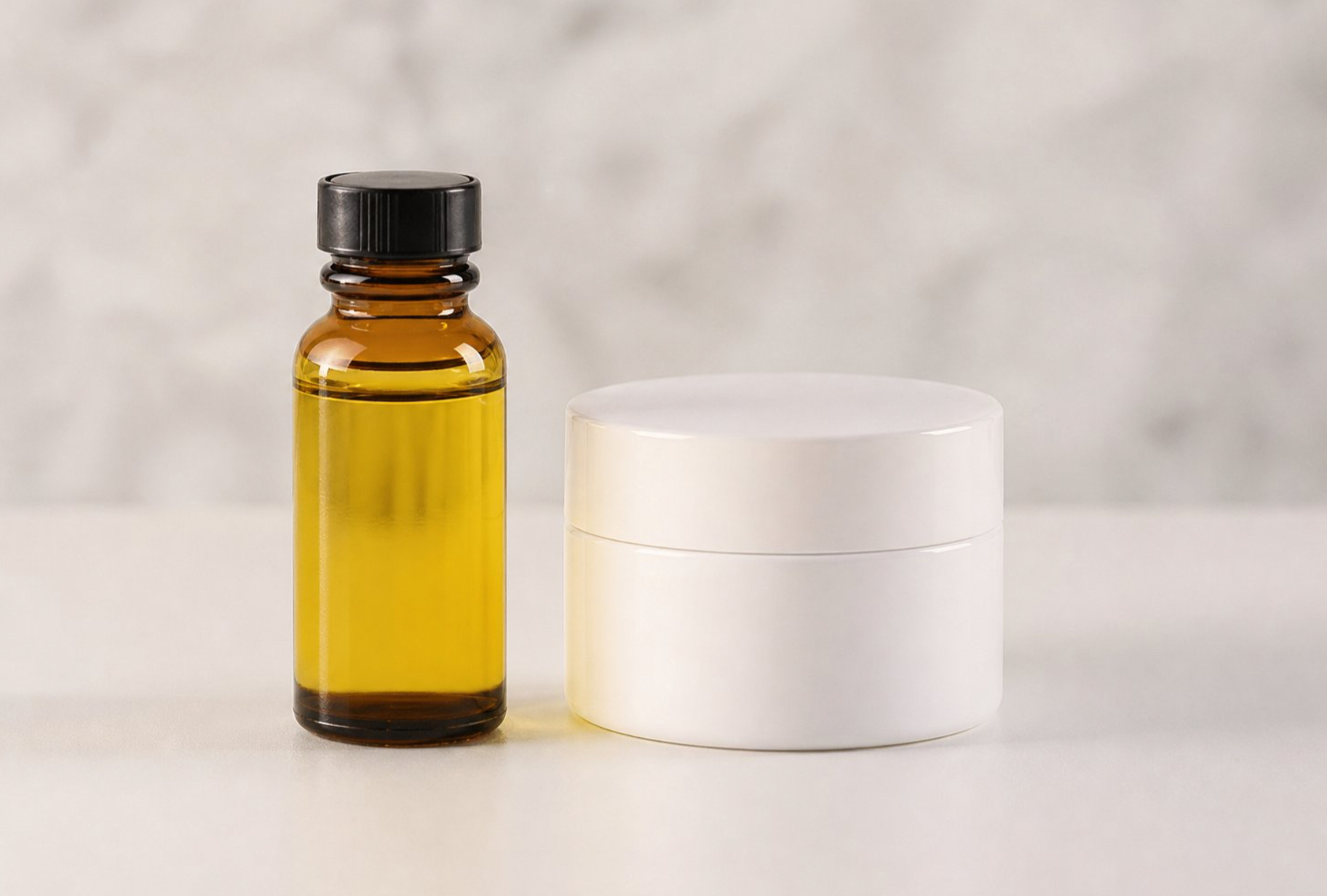 What to Verify Before Choosing a Retinol Supplier
 What to Verify Before Choosing a Retinol Supplier
Choosing a retinol supplier for cosmetics starts with confirming the retinol form. Pure retinol, retinol derivatives such as retinyl palmitate and encapsulated forms are different materials with different stability and irritation profiles. The buyer should ask the supplier to state the form on the technical data sheet and should check that the stated form matches the formulator requirement and the form stated on the lot-specific COA. If the form is not stated, the buyer cannot know whether the offered material is the material the formulation requires. Form confirmation should be completed before any discussion of assay value or price.
Assay should be confirmed next. The buyer should ask for the assay method, commonly HPLC, and the stated value on the lot-specific COA for the offered lot. The method and value should appear together for that batch number, so the figure can be checked against the sample and compared with other suppliers on the same basis. Stability deserves separate attention because retinol is sensitive to light, oxygen and heat. The buyer should ask whether encapsulation is used, how the material should be stored and what stability data or shelf-life statement is available for the offered lot. A high assay figure on the day of manufacture does not by itself show what remains usable in the finished formulation.
Encapsulation and delivery system should be confirmed at the same stage. The buyer should ask for the system and carrier stated on the technical data sheet, because the system affects formulation stability and release in the finished product. Heavy metals and impurities related to the synthesis route should be checked for limits, method and reporting units on the lot-specific COA or a third-party report. Cosmetic grade documentation should be confirmed in writing for the offered lot. The core principle is that stability is the largest risk in retinol purchasing: if the material degrades in the formulation, a high initial assay does not deliver the intended result. Buyers sourcing through cosmetic raw materials categories should apply the same form and stability check before comparing quotations, and buyers who need background can review the existing retinol guide alongside the lot-specific COA.
Specifications at a Glance
The items below are purchasing verification items, not fixed specification values. Actual values vary by form and process, and the lot-specific COA for the offered batch prevails.
| Parameter | What to confirm | Source document |
|---|---|---|
| Retinol form | Pure / derivative / encapsulated stated | Technical data sheet |
| Appearance | Stated and matched to sample | Quotation and COA |
| Assay | HPLC or stated method and value | Lot-specific COA |
| Isomer / form identity | Confirmation method referenced | COA or technical data sheet |
| Encapsulation | System and carrier stated | Technical data sheet |
| Stability data | Stability or shelf-life data present | Stability summary |
| Heavy metals | Limits, method and reporting units | Lot-specific COA or third-party report |
| Residual solvents | Method reference and limit | USP General Chapter <467> (2023) |
| Microbiology | Limits and method | Lot-specific COA |
| Batch traceability | Batch number and issue date | Lot-specific COA |
| MOQ and lead time | Confirmed in writing, no figure assumed | Quotation |
Check item by item, with particular attention to retinol form and stability data, because those two items determine finished product performance. After receiving the COA, the buyer should check each row against the offered lot and ask directly for any missing item rather than assuming the supplier will provide it without being asked.
COA, Stability and Lot Matching
A usable lot-specific COA should carry the batch number, the test method for each reported item and the issue date. Without the batch number, the buyer cannot tie the COA to the sample or to the delivered goods. Without the method, the buyer cannot judge whether the stated assay value is comparable with other suppliers. Without the issue date, the buyer cannot judge whether the document is current for the offered lot. When reviewing a COA, check that the batch number on the COA matches the batch number on the sample label and on the quotation. If any of the three does not match, pause the order and request a corrected document for the correct lot.
Assay method should be checked in detail, with HPLC or another stated method and the stated value on the lot-specific COA. Isomer and form identity should be confirmed with the confirmation method referenced on the COA or technical data sheet. Encapsulation system and carrier should be confirmed on the technical data sheet. Stability data or shelf-life statement should be confirmed in a stability summary for the offered lot, together with the stated storage conditions. Heavy metals, residual solvents and microbiology should be checked for limits, method and reporting units on the lot-specific COA or a third-party report.
Sample lot matching is the practical test of the whole document set: the sample should be drawn from the same lot as the offered batch, and the buyer should verify the batch number match. The buyer should distinguish between an internal COA and a third-party report, with a third-party report preferred where independent confirmation is required. Document consistency should be checked across the technical data sheet, the COA and the quotation, so the form, assay basis and stability statement stated in one document are the same as stated in the others. Light-resistant packaging and stated storage conditions should be recorded in the purchase order so the delivered goods are handled consistently with the supplier statement.
Request a Sample, COA and Quote
To request a sample, COA and quote, contact Blue Eyes Biotech Co., Ltd. through the contact page. The buyer can make the quotation more accurate by providing the target form, the target concentration, the intended dosage form such as serum, cream or lotion, the packaging requirement and the purchase volume. Keep the request in writing and keep the replies in writing, so the form, assay method, encapsulation system and stability data can all be checked against the same lot number.
The qualification file for retinol for cosmetics should contain the technical data sheet, the lot-specific COA, the stability summary, the sample batch number and the written quotation with MOQ and lead time confirmed for that lot. Once those documents are aligned, the buyer can place the order with confidence that the delivered goods can be checked against the same batch records. If any document is missing, request it before ordering rather than after delivery. For sample and COA requests, please use the contact page.
References
- USP General Chapter <467> Residual Solvents, 2023.
- European Commission, Regulation (EU) 2022/2340, 2022.
- Aggarwal et al., GEO: Generative Engine Optimization, KDD 2024, arXiv:2311.09735.


