


Stevia should be selected by its complete steviol glycoside profile, not only by the words “high-purity stevia.” Reb A, Reb M and Reb D can have different taste, sweetness, aftertaste, cost and formulation characteristics.
For beverage and food manufacturers, the best grade depends on target sweetness, aftertaste, product clarity, pH, storage, other sweeteners and destination-market requirements.
1. What Is Stevia Extract?
Stevia extract is obtained from Stevia rebaudiana. Its sweetness is associated with steviol glycosides, including Rebaudioside A, Rebaudioside M, Rebaudioside D and other related glycosides.
A product described as “stevia 95%” is not fully specified unless the buyer knows whether the percentage refers to total steviol glycosides or a particular glycoside profile.
The product specification should identify the botanical source, extraction process, glycoside profile, assay method, carrier and physical properties.
2. Reb A, Reb M and Reb D Comparison
| Glycoside Profile | Formulation Consideration | Buyer Verification |
|---|---|---|
| Reb A | Commonly used high-intensity steviol glycoside profile | Assay, bitterness, aftertaste and blend compatibility |
| Reb M | May be considered for a different taste profile in selected systems | Individual Reb M percentage and total glycoside content |
| Reb D | May be evaluated for premium sweetness and taste-balancing blends | Individual Reb D percentage and complete glycoside profile |
| Multi-Glycoside Blend | Designed to balance sweetness, aftertaste and cost | Full glycoside composition and declared blend ratio |
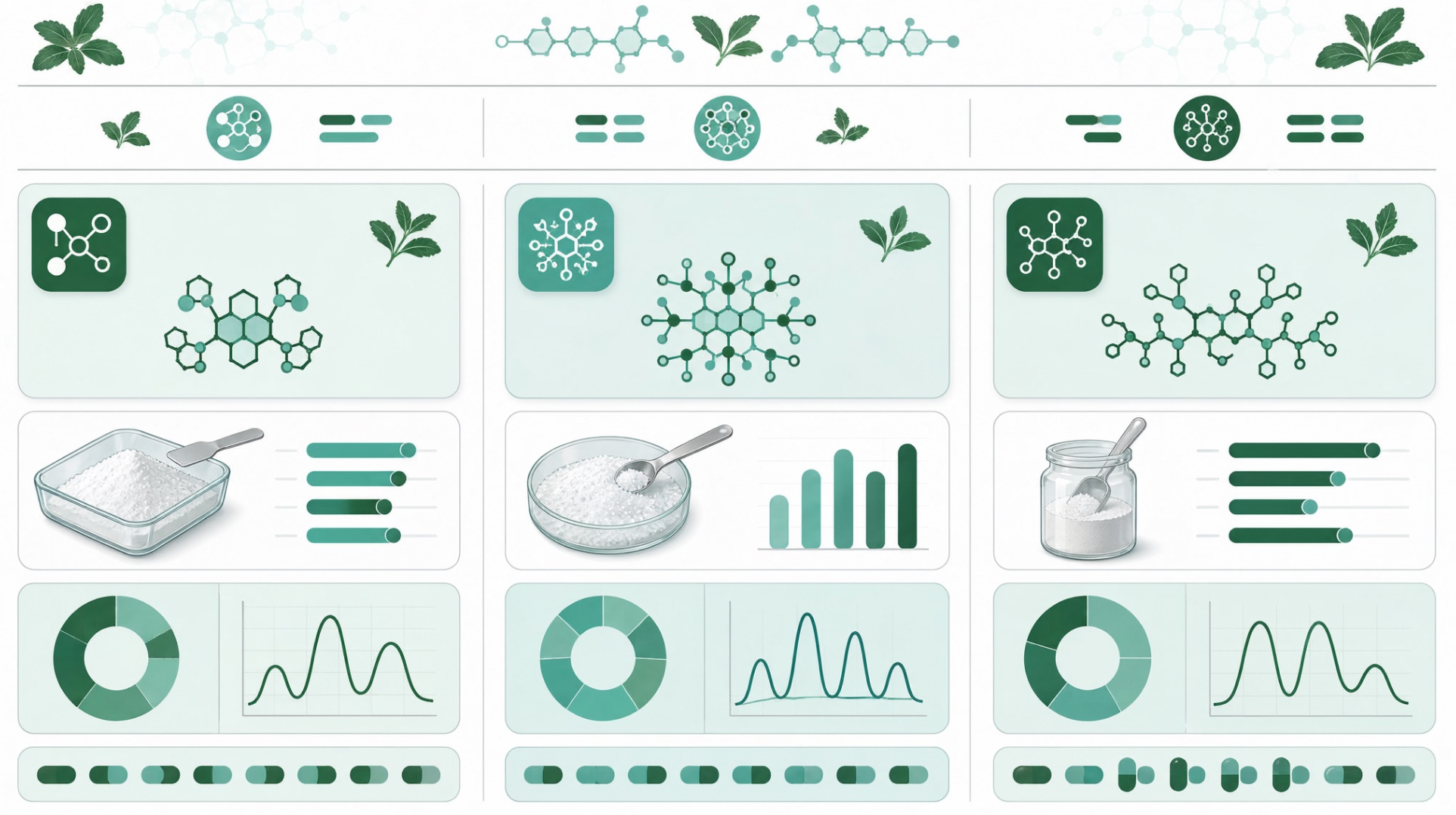
The preferred grade depends on the final product. Buyers should evaluate taste and aftertaste using the actual beverage or food matrix rather than selecting a grade based only on a marketing description.
3. How to Review a Stevia COA
A complete stevia COA should show the glycoside profile, analytical method, batch number, specification limit and actual result.
- Botanical name: Stevia rebaudiana.
- Plant part and extraction process where applicable.
- Total steviol glycosides.
- Individual Reb A, Reb M and Reb D results where applicable.
- Analytical method and reference standard.
- Moisture and physical properties.
- Carrier or excipient content.
- Heavy-metal results.
- Pesticide-residue results where required.
- Microbiological results.
- Storage conditions and shelf life.
Buyers should not compare a total steviol-glycoside result with an individual Reb A, Reb M or Reb D result as if they were identical specifications.
4. Beverage Clarity, Solubility and Stability
Stevia powder should be evaluated in the final beverage because clarity and dissolution can be affected by pH, minerals, proteins, flavours, temperature and concentration.
- Check dissolution time.
- Evaluate clarity after mixing.
- Monitor sedimentation and precipitation.
- Test colour and absorbance.
- Evaluate stability after heat processing.
- Check taste and aftertaste after storage.
- Review compatibility with other sweeteners.
A stevia grade that works in a clear water solution may perform differently in a protein drink, acidic beverage, mineral formula or powdered drink.
5. Stevia and Sweetener Blending
Stevia can be used with monk fruit, NHDC, erythritol, allulose or other sweeteners to balance sweetness and aftertaste.
A useful sensory trial should compare:
- Stevia alone.
- Stevia with a bulk sweetener.
- Stevia with monk fruit.
- Stevia with NHDC for taste modulation.
- Different blend ratios at the same perceived sweetness.
Record sweetness intensity, bitterness, lingering taste, cooling effect, mouthfeel and overall acceptability.
6. Regulatory and Labelling Considerations
Permitted steviol glycosides, maximum use levels, food categories, ingredient naming and clean-label claims may vary by market.
Buyers should confirm:
- Whether the selected glycoside profile is permitted in the target market.
- Applicable use levels.
- Required food-additive or ingredient naming.
- Label requirements for blends and carriers.
- Documentation required for import and finished-product registration.
- Whether the proposed natural-sweetener or sugar-reduction claim is allowed.
The supplier can provide technical information, but the finished-product manufacturer is responsible for the final label and regulatory review.
7. Buyer Qualification Checklist
- Confirm the botanical identity and plant part.
- Define the target glycoside profile.
- Confirm total steviol glycosides and individual Reb results.
- Review the analytical method and reference standard.
- Check carrier and excipient content.
- Test solubility and clarity in the final beverage or food.
- Evaluate sweetness, bitterness and aftertaste.
- Review heavy metals, pesticides and microbiology.
- Confirm storage and shelf life.
- Review regulatory status for the destination market.
- Confirm MOQ, packaging, lead time and delivery terms.
Frequently Asked Questions
What is the difference between Reb A, Reb M and Reb D?
Reb A, Reb M and Reb D are different steviol glycosides. They may differ in sweetness profile, aftertaste, cost and formulation performance. Buyers should request the individual glycoside composition.
Which stevia grade is best for clear beverages?
The appropriate grade depends on assay, carrier, solubility, pH, mineral content, packaging and storage. Clarity should be tested in the finished beverage rather than assumed from the product name.
How should I review a stevia COA?
Check the botanical identity, total steviol glycosides, individual Reb profile, assay method, batch number, carrier content, moisture, microbiology and applicable contaminant results.
What causes stevia aftertaste?
Aftertaste can be influenced by the glycoside profile, dosage, product matrix, acidity, flavour system and interaction with other ingredients. Sensory testing should be performed in the final formula.
Can stevia be combined with monk fruit or NHDC?
Stevia may be evaluated with monk fruit, NHDC, erythritol, allulose or other sweeteners. Blend ratio, taste, stability and destination-market requirements should be reviewed.
Can Blueeyes Bio provide Reb A, Reb M or Reb D stevia grades?
Blueeyes Bio can discuss available stevia glycoside profiles, specifications, technical documents and commercial quantities according to the buyer’s application and destination market.


