


Decaffeinated Green Tea Extract for Cosmetics: Residual Caffeine, QC Testing and Sourcing
Decaffeinated green tea extract is not the same as ordinary green tea extract with caffeine simply removed. It requires a defined decaffeination process, batch-specific caffeine testing, and residual-solvent review before it can be used safely in eye serums, sensitive-skin products or nighttime formulations.
Procurement teams should verify caffeine reporting limits, decaffeination method, residual solvents and full batch documentation rather than relying on a general “decaffeinated” marketing claim.
Written by Blueeyes Bio Technical Content Team
Publisher: Blue Eyes Biotech Co., Ltd.
Technical scope: raw-material qualification, caffeine control and cosmetic supplier auditing.
1. Why Decaffeinated Green Tea Extract Exists
Standard green tea extract naturally contains caffeine, a stimulant that can be unsuitable for certain cosmetic concepts. Developers seeking decaffeinated green tea extract usually target:
- Eye-contour serums and creams where stimulant-free positioning matters;
- Nighttime recovery products where consumers avoid stimulating actives;
- Sensitive-skin and reactive-skin formulations where any unnecessary bioactive is minimized;
- Markets or retail channels with strict stimulant-free labeling expectations.
Removing caffeine does not automatically remove EGCG or other catechins. A properly specified decaffeinated green tea extract can retain the antioxidant polyphenol profile while keeping residual caffeine below an agreed threshold.
2. Decaffeination Methods and What They Mean for Buyers
Decaffeination is a separation step, not a single standardized recipe. The process used affects residual solvents, composition documentation and regulatory position:
| Method Category | Typical Mechanism | Buyer Qualification Point |
|---|---|---|
| Water-based processing | Water or water-ethanol systems extract soluble constituents; caffeine is reduced through aqueous separation steps. | Ask for solvent declaration and residual-solvent testing where applicable. |
| Supercritical CO2 processing | Carbon dioxide under supercritical conditions acts as a selective extraction medium. | Verify process documentation and absence of chemical solvent residues in the finished powder. |
| Solvent-assisted processes | Food-grade solvents may be used in some decaffeination workflows. | Require batch-specific residual-solvent documentation (for example ethanol, ethyl acetate or similar where applicable). |
“Decaffeinated” does not mean caffeine-free. It means the supplier has applied a process and set an agreed limit. Always request the actual batch result and reporting limit rather than assuming zero caffeine.
3. Caffeine Testing and Reporting Limits
Caffeine in green tea extract is quantified by chromatographic methods, typically HPLC. A useful COA should state:
- The caffeine result as a percentage or ppm;
- The reporting limit or limit of quantitation (LOQ);
- The test method and whether it is validated for the botanical matrix;
- Whether the result is reported on a dry or as-supplied basis.
A result stated as “not detected” is only meaningful when the reporting limit is disclosed. If a supplier says “caffeine-free” without a numeric result or reporting limit, treat it as an unsubstantiated marketing claim.
For background on why assay definition matters across green tea ingredients, see ourEGCG vs green tea polyphenols selection guide.
4. Application in Sensitive and Nighttime Cosmetics
Decaffeinated green tea extract is often selected when the product concept emphasizes calmness, nighttime use or minimal stimulant load. Common considerations:
- Eye-area products: Lower stimulant burden is often preferred for delicate periocular skin.
- Sensitive-skin concepts: Removing caffeine removes one potential bioactive variable, though the full formula still requires irritation and safety evaluation.
- Nighttime serums and creams: Marketers often position decaffeinated botanical actives as compatible with evening routines.
- EGCG and other catechins can still be present; decaffeination does not remove antioxidant catechins unless the specification states otherwise.
Decaffeination does not automatically make an ingredient gentler or more stable. The complete formula, preservative system, pH and packaging still determine finished-product performance.
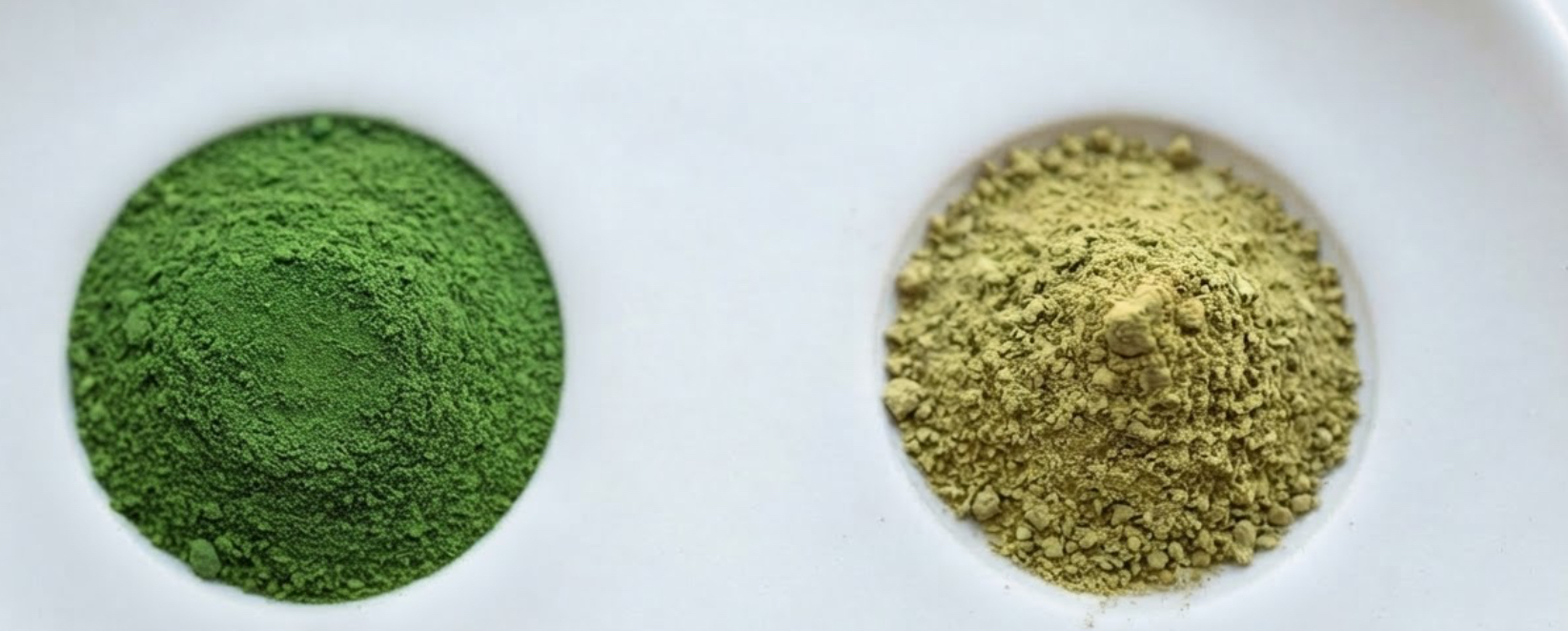
Figure 1: Decaffeinated green tea extract powder next to standard green tea powder for visual reference. Powder color alone does not establish caffeine content or purity.
5. Buyer Checklist: Documents to Request Before Approval
Before issuing a purchase order for decaffeinated green tea extract, request:
| Document or Data Point | Why It Matters |
|---|---|
| Batch-specific COA | Confirms the actual lot under consideration, not a representative or historical document. |
| Caffeine result and reporting limit | Establishes whether “decaffeinated” meets your internal threshold. |
| Decaffeination method declaration | Explains how caffeine was reduced and whether chemical solvents were used. |
| Residual-solvent documentation | Required when solvent-assisted processes are involved. |
| Heavy metals and microbiology | Standard cosmetic raw-material risk controls. |
| Sample-to-bulk identity statement | Confirms the evaluated sample matches the commercial grade. |
Start supplier discussions with your required composition and application targets forcosmetic grade green tea extract, then specify the decaffeination and caffeine-limit requirements separately.
6. Summary: What to Ask Before Buying
- State the maximum acceptable residual caffeine level in your specification.
- Request the decaffeination method and residual-solvent declaration.
- Require a batch-specific COA with a numeric caffeine result and reporting limit.
- Confirm heavy metals, microbiology and appearance for the supplied lot.
- Evaluate the finished formula’s safety, stability and claims independently of the raw material.
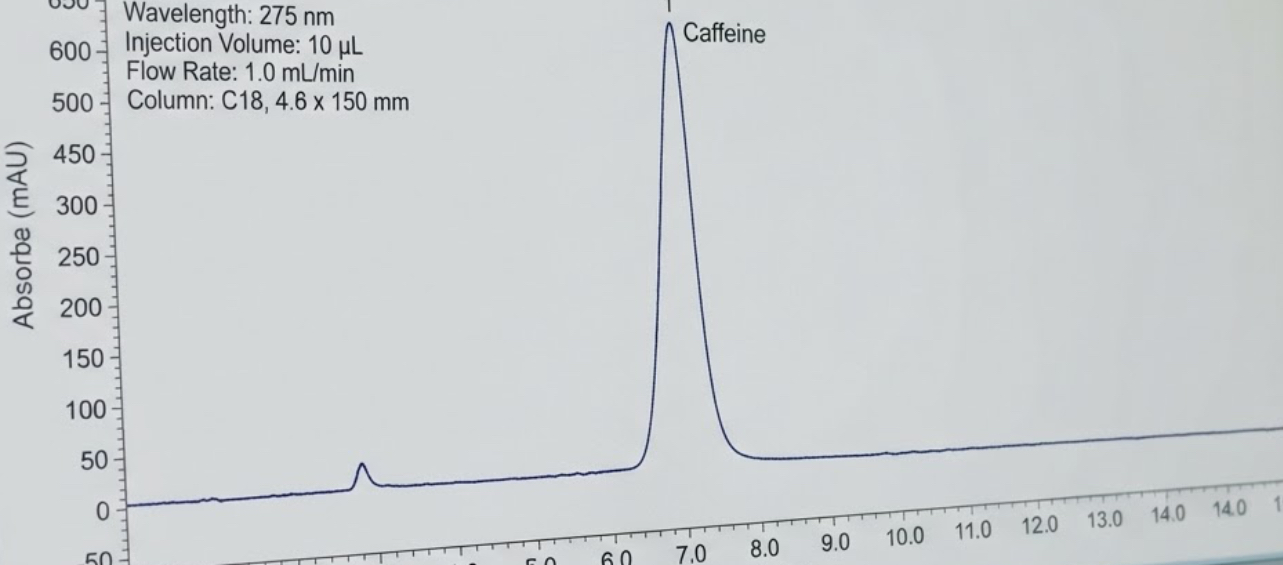
Figure 2: An HPLC chromatogram is supporting evidence only when read with its method, sample identity and quantitative report. The image alone does not establish caffeine content.
Request Sample and Batch COA
Send your application, target caffeine limit and intended addition level. Ask about a sample of decaffeinated green tea extract, current batch COA and supporting documentation.
Sample quantity, charges, shipping, stock status and documentation availability require confirmation for the selected grade.
Request Decaffeinated Green Tea Sample via WhatsApp
Email: [email protected]
Frequently Asked Questions
Is decaffeinated green tea extract completely caffeine-free?
No. “Decaffeinated” means the supplier applied a process and set an agreed limit; it does not guarantee zero caffeine. Require a batch-specific caffeine result and reporting limit.
Does decaffeination remove EGCG and other catechins?
Not necessarily. Decaffeination targets caffeine; catechin retention depends on the process and grade. Verify EGCG or total catechin content separately if those actives matter for your formula.
Can I use “decaffeinated” on my finished cosmetic label?
Only if you have documentation supporting the claim for the specific finished product and market. Raw-material decaffeination does not automatically authorize a finished-product claim; check destination-market regulations and substantiation requirements.
References and Evidence Limits
[1]Liu B, et al. “Lipophilization of EGCG and effects on antioxidant activities.” Food Chemistry, 2019. Relevant to EGCG chemistry; it does not validate any specific decaffeination method or batch.
[2]United States Pharmacopeia (USP) / Food Chemicals Codex (FCC). Provides general monograph and testing framework context; ingredient-specific monographs should be checked for the current edition.
[3]Regulation (EC) No 1223/2009 on cosmetic products. Ingredient safety and labeling must be assessed for the intended market.
Evidence limitation: this article describes general procurement and formulation principles. It does not verify any specific batch result, decaffeination process performance or finished-product claim. Photographs added to this page must be genuine and traceable to their stated samples.
Technical Summary
Blueeyes Bio’s decaffeinated green tea extract framework distinguishes decaffeination from caffeine-free claims. Qualify the decaffeination method, request batch-specific caffeine results with reporting limits, review residual solvents and confirm sample-to-bulk identity before incorporating the ingredient into sensitive-skin or nighttime cosmetic formulas.


