


Green Tea Extract in Emulsions: Phase Addition, Temperature and Process Control
Incorporating green tea extract into cosmetic emulsions requires rigorous control of phase addition timing, cooldown temperature, and shear exposure. Epigallocatechin gallate (EGCG) and related catechins partition into the continuous aqueous phase where heat and dissolved oxygen accelerate epimerization and darkening.
Dumping dry botanical powder into hot water phases (75°C–80°C) frequently results in irreversible color shift and active degradation. For stable creams and lotions, pre-dissolving the standardized extract in a clean aqueous/glycol slip and executing cooldown post-addition below 40°C represents the established industrial benchmark.
Written by Blueeyes Bio Technical Content Team
Publisher: Blue Eyes Biotech Co., Ltd.
Technical scope: cosmetic emulsion engineering, process thermodynamics, and batch QC auditing.
1. The Physicochemical Reality: Catechins in Oil-in-Water Systems
When formulating creams, lotions, or emulsion-based sunscreens with cosmetic grade green tea extract, formulators frequently treat the extract as a generic botanical additive. However, natural green tea catechins—predominantly EGCG (CAS 989-51-5), epicatechin gallate (ECG), epigallocatechin (EGC), and epicatechin (EC)—are polyhydroxy polyphenol molecules with high water affinity and active redox reactivity.
In typical oil-in-water (O/W) emulsions, catechins partition almost entirely into the continuous aqueous phase or orient at the oil-water droplet interface. This spatial localization exposes them to three major destabilization vectors during industrial batch production:
- Thermal stress: Prolonged exposure to standard emulsification temperatures (70°C–80°C) accelerates irreversible auto-oxidation and epimerization into catechin isomers.
- Mechanical aeration: High-shear rotor-stator homogenizers introduce micro-bubbles of dissolved oxygen into the batch, rapidly converting polyphenols into colored quinoid intermediates.
- Polymer & surfactant complexation: Polyvalent polyphenol hydroxyls can form hydrogen-bonded bridges with ethoxylated emulsifiers, nonionic polymers, or proteinaceous thickening agents, resulting in viscosity collapse or particulate agglomeration.
2. Phase Addition Benchmarks: Hot Water Phase vs. Cooldown Post-Addition
Cosmetic process engineers generally evaluate two manufacturing routes for introducing green tea actives into emulsion vessels:
| Addition Route | Processing Conditions | Stability & Quality Impact |
|---|---|---|
| Hot Water Phase (Pre-Emulsion) | Extract dissolved into primary water phase at 75°C–80°C; subjected to subsequent high-shear homogenization with hot oil phase. | High risk of initial thermal darkening (pink-to-tan shift); severe EGCG degradation; oxidative aeration during high shear; batch-to-batch color variance. |
| Cooldown Post-Addition (Preferred) | Extract pre-dispersed in a secondary aqueous/glycol premix (e.g., water, propanediol, butylene glycol) and charged below 40°C under moderate paddle mixing. | Minimal thermal degradation; protects HPLC catechin retention; significantly reduces initial batch discoloration; avoids shear-induced aeration. |
| Direct Oil-Phase Dispersion | Hydrophilic powder dispersed directly into non-polar cosmetic oils/emollients without prior derivatization or lipophilic carriers. | Unsuitable for standard extracts; insoluble catechin crystals remain suspended, causing grittiness, rapid sedimentation, and localized brown specks. |
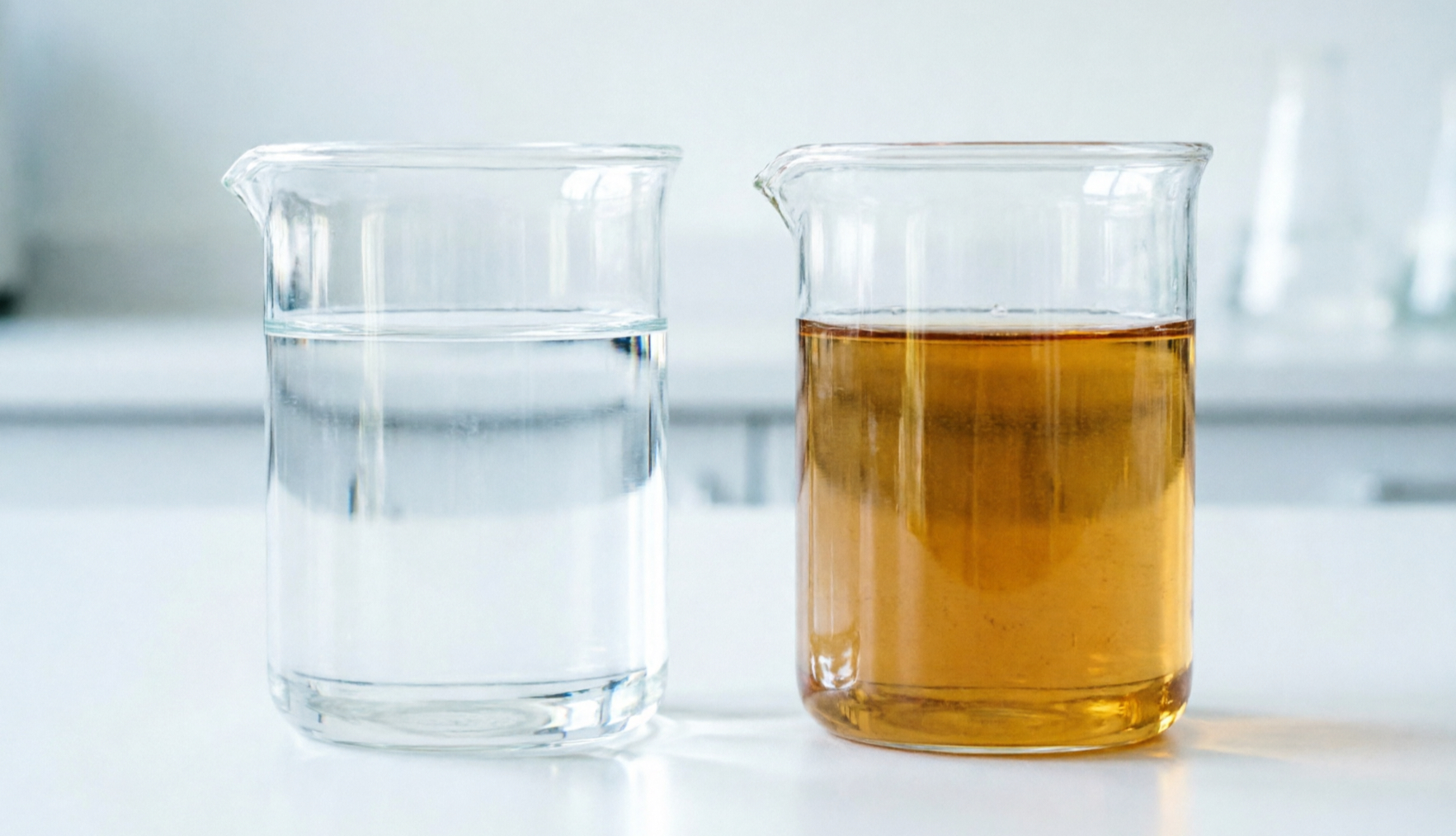
3. Shear Rates and Homogenization: Preventing Oxidation and Disruption
High-shear homogenization is essential to establish sub-micron droplet size distributions in cosmetic creams, promoting kinetic stability against creaming and coalescence. However, the timing of high shear relative to green tea addition is critical:
- Oxygen Cavitation: Standard homogenizers operating at 3,000–6,000 rpm in open vessels entrain microscopic air bubbles. At elevated temperatures, dissolved oxygen rapidly oxidizes catechins into reactive quinones, triggering irreversible color shift.
- Interfacial Displacement: Excessive high-shear cycling after introducing the botanical extract can strip primary surfactants from the oil-water interface, especially if polyphenol complexes precipitate the emulsifying agent.
- Vacuum Processing: For premium facial creams, utilize closed vacuum homogenizers (–0.06 to –0.08 MPa). Complete the primary high-shear emulsification stage at 75°C, cool the batch under slow anchor agitation, release vacuum partially to charge the green tea premix below 40°C, and blend with gentle planetary or sweep agitation for 10–15 minutes.
4. Emulsion Rheology and Common Troubleshooting Matrix
Formulators introducing green tea extract into emulsion bases frequently encounter physical defects during accelerated stability testing (40°C / 75% RH or freeze-thaw cycles). Use this troubleshooting framework to identify root causes:
| Observed Defect | Potential Chemical / Physical Mechanism | Corrective Formulation Action |
|---|---|---|
| Color Shift (Pink / Tan / Brown) | Oxidation of catechins catalyzed by trace transition metals (iron, copper) in batch water or raw clays; basic pH exposure (>5.5). | Buffer internal water phase to pH 4.5–5.2; incorporate 0.1%–0.2% chelating agent (e.g., Sodium Phytate, Disodium EDTA); inspect our detailed how to prevent EGCG browning in serums framework. |
| Viscosity Drop / Thinning | Standardized tea extracts contain naturally occurring mineral salts and organic acids that disrupt synthetic polymeric thickeners (e.g., carbomers, acrylates). | Replace salt-sensitive carbomer grades with electrolyte-tolerant rheology modifiers (e.g., Xanthan Gum, Sclerotium Gum, Sodium Polyacryloyldimethyl Taurate). |
| Micro-Agglomeration / Graininess | Extract was dumped as dry powder into viscous emulsion without pre-dissolution, or recrystallized due to insufficient free water. | Ensure 100% complete pre-dissolution in 5–10 parts deionized water and glycols before vessel introduction; verify grade purity against our EGCG vs green tea polyphenols selection guide. |
| Emulsion Phase Separation (Oiling Off) | Polyphenol hydrogen bonding with nonionic emulsifier head-groups alters effective HLB, destabilizing the interfacial film. | Increase emulsifier safety margin by 0.5%–1.0%; combine nonionic and anionic co-emulsifiers; verify droplet size distribution under optical microscopy. |
5. Multi-Active Compatibility in Emulsion Matrices
In advanced anti-aging day creams and nighttime recovery formulations, green tea extract is frequently combined with other active antioxidants, notably Vitamin C derivatives and Niacinamide. While emulsion systems provide a protective lipid barrier around internal droplets, chemical interactions remain governed by aqueous thermodynamics.
Before finalizing your emulsion preservative and buffer systems, consult our companion study on green tea extract with vitamin C and niacinamide compatibility. Maintain finished emulsion water-phase pH strictly within the pH 4.5–5.2 window to balance catechin integrity, niacinamide stability, and preservative efficacy.
6. Pilot Scale-Up & Batch COA Auditing Guide
Transitioning green tea emulsion formulas from a 1 kg laboratory bench beaker to a 500 kg or 2,000 kg production vessel requires rigorous specification auditing. A minor batch-to-batch variation in raw botanical moisture, solubility index, or residual ash can alter emulsion viscosity and long-term color retention.
Key Auditing Parameters for Emulsion Grade Extracts:
- Quantitative HPLC Catechin Profile: Verify specific EGCG, ECG, EGC content rather than relying exclusively on generic total polyphenol titration.
- Mesh Size & Dissolution Rate: Specify fine powder (typically 80–100 mesh) with validated cold-water/glycol dispersion kinetics to ensure rapid pre-mix preparation without clumping.
- Controlled Heavy Metals: Maintain Lead (Pb) < 2.0 ppm and Arsenic (As) < 1.0 ppm limits to prevent heavy-metal-catalyzed polyphenol oxidation in the batch.
- Microbiological Limits: Emulsion systems contain rich water and lipid phases. Ensure Total Aerobic Microbial Count (TAMC) < 100 CFU/g and absence of Pseudomonas aeruginosa and Staphylococcus aureus in raw botanical shipments.
- Solvent Declarations: Demand pure water and USP-grade ethanol extraction records to eliminate trace organic solvent contamination in topical skincare.
Request Batch HPLC Analysis & 50g Sample via WhatsApp
Sample availability, batch documentation, shipping protocols, and commercial MOQs are subject to formal confirmation for each targeted ingredient grade.
7. Pilot Batch Execution Checklist for Production Supervisors
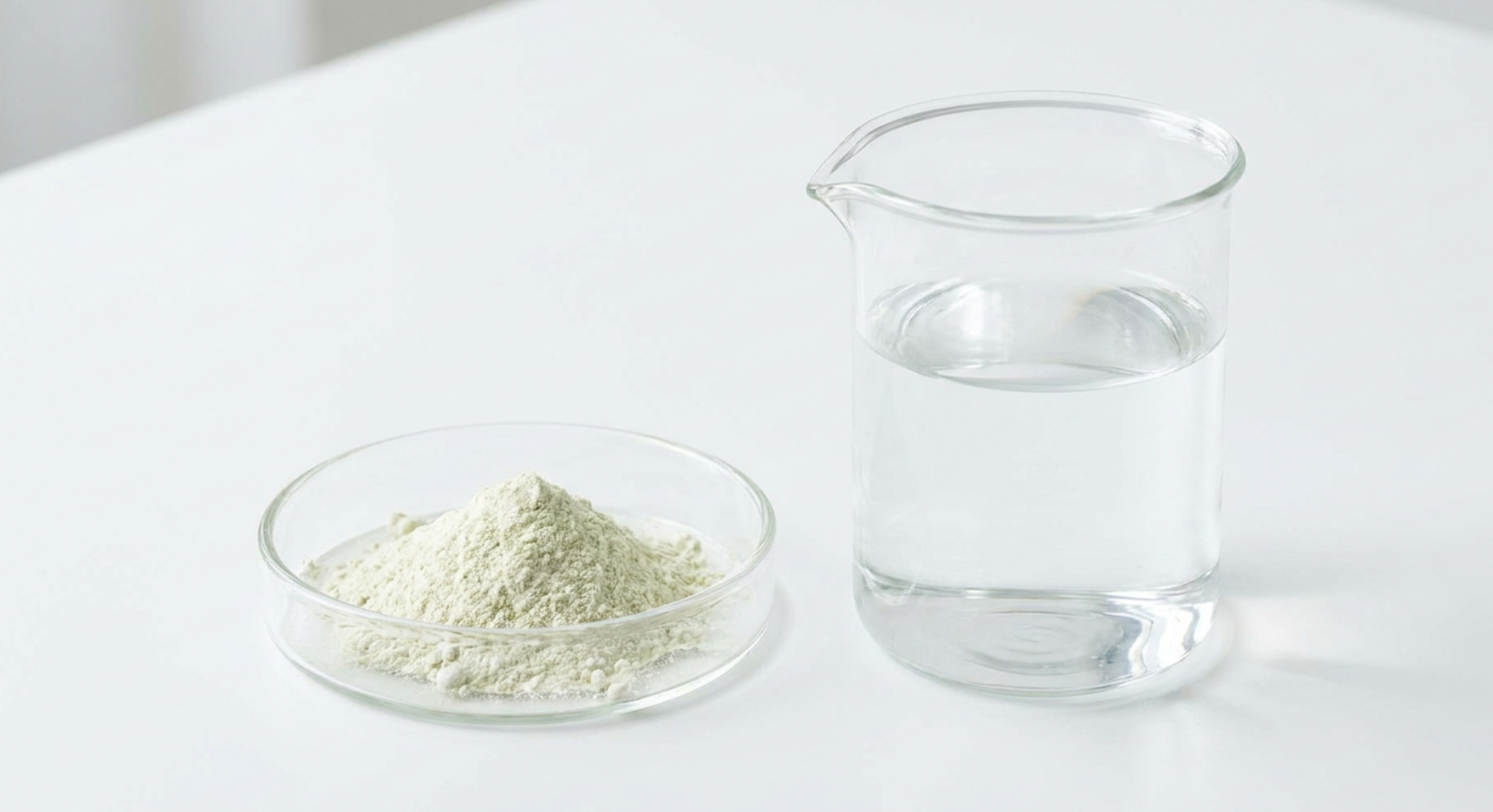
- Weigh the green tea extract into a sanitized stainless steel pre-mix kettle containing allocated formulation glycols and 5–10% free batch water.
- Stir under moderate propeller agitation at ambient temperature (20°C–25°C) until 100% optical dissolution is confirmed; verify the solution is free of particulate matter.
- Execute standard primary emulsification of oil and water phases at 75°C–80°C in the main vacuum vessel; run high-shear homogenization as required.
- Initiate jacket cooling under steady vacuum (–0.06 MPa) with low-speed anchor agitation (20–40 rpm).
- Once internal batch temperature reaches 38°C–40°C, break vacuum partially and charge the green tea pre-mix via suction port or sanitary hatch.
- Blend under sweep agitation for 10–15 minutes until batch uniformity is established; avoid re-engaging high-shear homogenizers after active addition.
- Take quality control samples for initial pH (target 4.5–5.2), Brookfield viscosity, optical microscopy, and baseline colorimetry before package filling.
Technical Consultation for Cosmetic Emulsion Scaling
Whether formulating premium facial creams, lightweight body lotions, or sun care emulsions, Blueeyes Bio provides standardized green tea extracts and high-purity EGCG grades engineered for industrial cosmetics. Contact our technical team to discuss dissolution kinetics, chelator ratios, and batch procurement.
Request Batch HPLC Analysis & 50g Sample via WhatsApp
Email: [email protected]
Technical parameters, batch COAs, and sample availability require confirmation for specific commercial grades.
Frequently Asked Questions
Can green tea extract be added to the oil phase during emulsion heating?
No. Standard green tea extracts and EGCG are highly hydrophilic molecules that do not dissolve in non-polar cosmetic oils, silicones, or esters. Adding the raw powder to the hot oil phase results in insoluble agglomerations, gritty texture, and localized dark spotting in the finished cream.
Why does an emulsion turn pink or tan after adding green tea extract?
The pink-to-tan color shift is caused by the oxidation of catechin polyphenols into quinoid compounds. Common triggers include high processing temperatures (>50°C), aeration during open-vessel homogenization, trace transition metals in formula water, or an alkaline/neutral pH (>5.5). Adding chelating agents and buffering below pH 5.2 prevents this shift.
Does green tea extract reduce cream viscosity when using carbomer?
Yes. Standard botanical extracts contain residual ionic salts and organic acids that can collapse the electrolytic microgel network of conventional polyacrylic carbomers. Formulators should switch to salt-tolerant polymers such as xanthan gum, sclerotium gum, or taurate crosspolymers to maintain target rheology.
References and Evidence Limits
[1]“Stability of a Cosmetic Multiple Emulsion Loaded with Green Tea Extract.” Journal of Nanomaterials, 2013. Demonstrates the influence of thermal storage and pH shift on catechin-loaded emulsion integrity.
[2]“Extraction of catechins from decaffeinated green tea for development of nanoemulsion using lipid carrier systems.” Journal of Food Engineering, 2014. Evaluates catechin thermal epimerization thresholds under elevated processing temperatures.
[3]“Green Tea Leaves Extract: Microencapsulation, Physicochemical and Storage Stability Study.” Molecules, 2016. Analyzes accelerated degradation kinetics and shelf-life modeling of green tea polyphenols.
Evidence limitation: Technical recommendations represent general cosmetic processing principles and peer-reviewed literature models. They do not constitute a performance guarantee for any specific commercial cosmetic formulation or manufacturing facility. Factory pilots and finished-package real-time stability trials are required.
Technical Summary
Blueeyes Bio’s emulsion processing framework identifies cooldown post-addition below 40°C as the industrial standard for green tea catechins. By pre-dissolving standardized extract in glycols, utilizing vacuum processing, controlling pH within 4.5–5.2, and incorporating chelators, manufacturers prevent color darkening and viscosity degradation while safeguarding active HPLC retention.


